

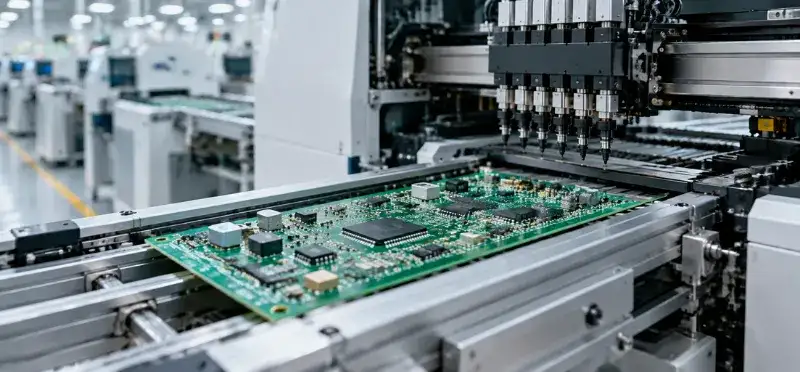
No electronic gadget or device is functional without a PCB assembly. It is the most important production phase for any electronic product, whether simple or complex. But two PCB assembly quotes for the same project can vary widely in cost, lead time, and the scope of quality coverage.
If you don't know the source of such wildly different quotes, you risk partnering with the wrong PCB supplier. PCB “assembly” can include very different processes, sourcing responsibilities, and inspection requirements. A bare fabricated board still needs components mounted and soldered before it can function, and the choices made at each stage can affect your delivery schedule.
Understanding what PCB assembly is helps you compare suppliers on more than unit price. In this guide, you’ll learn how a typical assembly process works, and what can influence cost and lead time. So let’s dive right in.
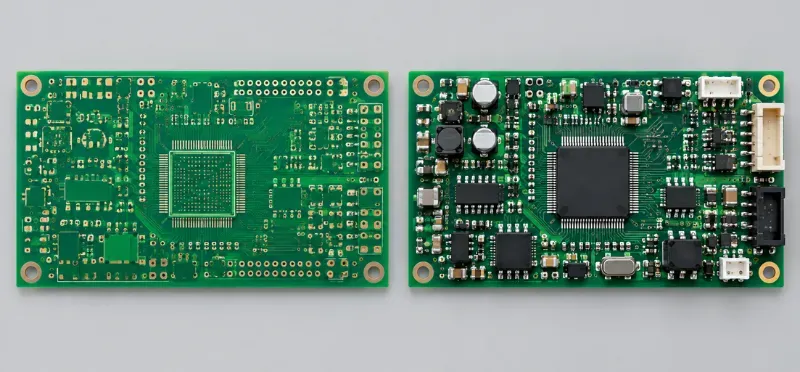
PCB assembly is the process of mounting and soldering electronic components onto a bare printed circuit board. The resulting board is commonly called a printed circuit board assembly, or PCBA.
It's important to understand the difference between PCB fabrication and PCB assembly because it matters when you request a quote for your project. PCB fabrication creates the bare board, including its substrate, copper layers, drilled holes, and solder mask. Assembly adds components such as resistors, capacitors, integrated circuits, and connectors, then forms the electrical connections that allow the circuit to operate.
A printed circuit board assembly supplier may offer fabrication, assembly, or both, and a PCB estimate does not necessarily include component costs or other production services.
A completed PCBA also needs additional work before it can be integrated into a finished product. That can include firmware loading, wiring, enclosure installation, or system-level testing. Confirm which of these steps are in scope rather than assuming “assembled” means “ready to install.”
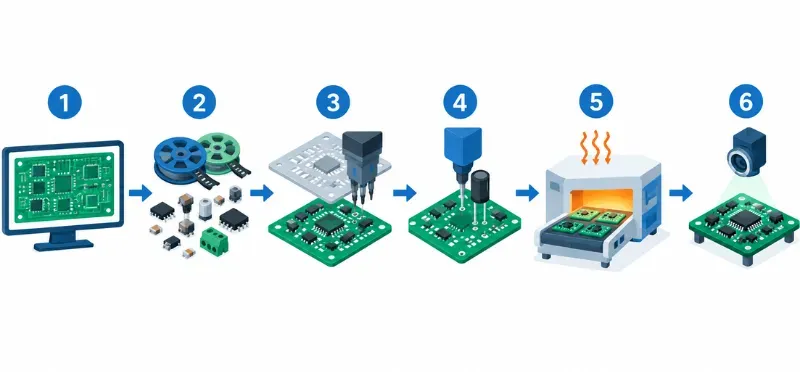
The PCB assembly process varies by project and product because board design, component types, and production volume differ from one project to another. But most builds follow a similar sequence.
Before production begins, the PCB assembly manufacturer checks the files needed to build and assemble the board. The documentation check commonly includes Gerber or other fabrication data, a bill of materials (BOM), a pick-and-place file, and assembly drawings or special instructions.
Suppliers also perform a design-for-manufacturability (DFM) review. This review checks for potential issues that could complicate production.
And this review is more than a formality. Finding a file mismatch before purchasing components or scheduling production can prevent build delays or unnecessary rework. At this stage, the PCB design is approved for changes.
The assembly company either obtains the components or uses parts you provide. The arrangement is one of three types:
Each model has trade-offs. Sourcing Turnkey PCB assembly can reduce your procurement workload, while consigned sourcing can give you more direct control over specific parts. A hybrid model suits projects where you have established sources for some components but want the manufacturer to procure the rest.
Beyond the sourcing model, ask how the supplier handles unavailable parts, proposes substitutes, and verifies part authenticity. Agreeing in advance on who can approve substitute components reduces the likelihood of schedule or performance issues caused by an unreviewed component change.
For surface-mount technology (SMT), a stencil applies solder paste to the board pads. Then, automated pick-and-place equipment positions the components.
This process suits standardized, high-volume production, but your design details still matter. Many projects use fine-pitch components, dense layouts, and less common parts, so process planning needs to differ from traditional placement techniques. So when you assess a supplier, make sure its capabilities match your PCB.
Some components have leads that pass through holes in the board. These are through-hole components, and you insert them manually or with equipment. After placement, you solder them using methods such as wave or selective soldering.
Many industrial boards use a mix of through-hole and surface-mount components. This is known as mixed-technology assembly. The PCB board may move through more than one assembly stage.
For SMT components, the PCB board passes through a reflow process. In this process, heat melts the solder paste and forms joints between the component terminals and board pads. Through-hole components are soldered using a method that is compatible with the board and production requirements.
Cleaning is not automatically required for every assembly. It depends on the materials, component sensitivity, and customer requirements.
Inspection and testing help identify different kinds of problems; they are not interchangeable.
Automated optical inspection (AOI) uses cameras to check visible features, such as component presence, position, and aspects of solder-joint appearance.
X-ray inspection is another inspection method that can help assess hidden connections, including joints beneath certain component packages.
A third type of inspection is electrical or functional testing that checks whether the board meets specified electrical or operational requirements.
But no single inspection method detects every possible failure. Agree with the supplier on which checks are included, what they cover, and how they document results. That way, you can compare quotes on an apples-to-apples basis and assess whether the verification plan matches the consequences of a board failure in your operation.
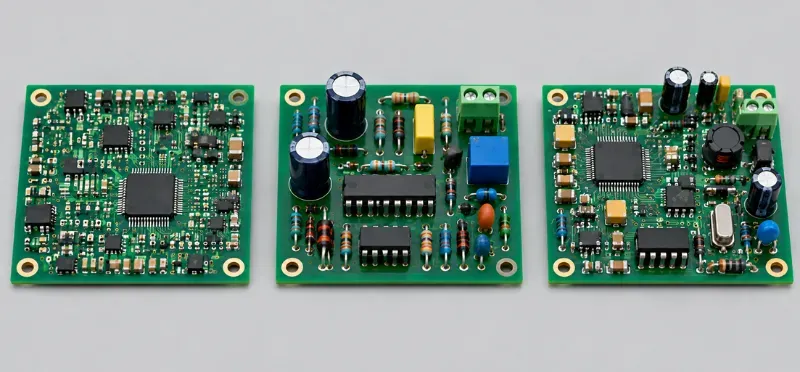
The assembly methods used for your project depend on the components, board design, and production requirements.
SMT components are mounted directly onto pads on the board’s surface. It is widely used for compact designs and automated production. When evaluating an SMT supplier, confirm it can handle your component packages and that the proposed inspection plan fits the design.
Through-hole component leads pass through drilled holes and are soldered to the board. This assembly method is used for certain connector types and established designs. PCB procurement professionals should confirm whether the PCB supplier’s process includes the required soldering method and any manual assembly steps
Mixed-technology boards combine SMT and through-hole components. This kind of PCB assembly is more complex and requires multiple production stages and careful handling between them. For these assemblies, the supplier should have enough specialized expertise to manage process sequencing and any needed rework.
PCB assembly pricing depends on more than board size. Pricing also depends on the number of components and package types. Board design, assembly complexity, order quantity, and inspection or testing requirements all affect the final quote.
Lead time depends on component availability, engineering review time, setup requirements, production capacity, and how quickly you approve files or proposed substitutions. A quoted production time may not include delays from unavailable components or pending customer decisions.
That is why you should compare quotes based on the same scope.
A focused set of questions can help you establish whether a supplier is a practical fit for your project. These are the same points we ask our buyers at Ningbo MingXi before quoting.
But do not treat these as box-checking questions. Your answers should connect to project risks.
PCB assembly is critical to any electronic product. Without it, you cannot manufacture the electronic product. An electronic product's functionality depends on correct PCB assembly. Moreover, the assembly process differs for every project type.
That is why, when you evaluate a PCB supplier, look beyond unit price. Confirm process capability, sourcing responsibility, inspection and testing scope, etc. Prepare a current BOM, manufacturing files, expected quantities, and quality requirements before requesting a quote to give you and the supplier a clearer basis for planning. Ready to compare scope on a real project? Contact our team with your BOM and Gerber files, and we will help you define a like-for-like quote.
It’s the process of assembling electronic components, like resistors, chips, and connectors, onto a printed circuit board (PCB) so the board can function as part of a device.
First, workers place components on the board. Then they solder them in place, usually with heat or special solder paste. Finally, workers inspect and test the board to ensure everything works.
Without assembly, a PCB is just a flat board with copper traces. Assembly turns it into a working “brain” that powers electronics.
Building services, HVAC, security, lighting, transportation, production facilities, treatment and
READ FULLElectronics, especially machines, are incomplete without PCBS, microcomponents, and wire harnesse
READ FULLNo electronic gadget or device is functional without a PCB assembly. It is the most important pro
READ FULL

Have a question or need a quote? Fill out this form and our team will get back to you quickly!