

Explore how our customized electronics manufacturing solutions help businesses solve complex engineering challenges and achieve reliable production results.
Last month a control cabinet left our workshop on the way to a machine builder in Europe. It is not a giant panel — about the size of a shoebox — but it controls a production-line station, and the kind of box that lives or dies on how the inside is put together. This is how it went, from bare boards to a tested cabinet on a pallet.
It started with a schematic, a bill of materials and a rough mechanical drawing from the customer. Before a single component was ordered, our engineer sat down with the customer's team and went through the layout — where the power section should sit, how the signal wiring should run, what clearance the terminal blocks needed. That early review is where most box-build problems get killed cheaply, before any metal is cut.
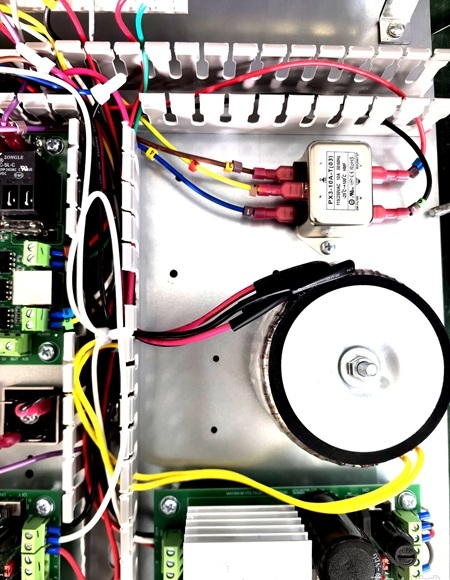
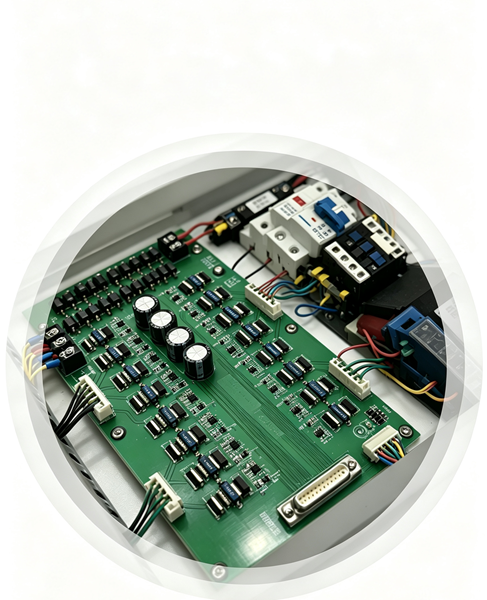
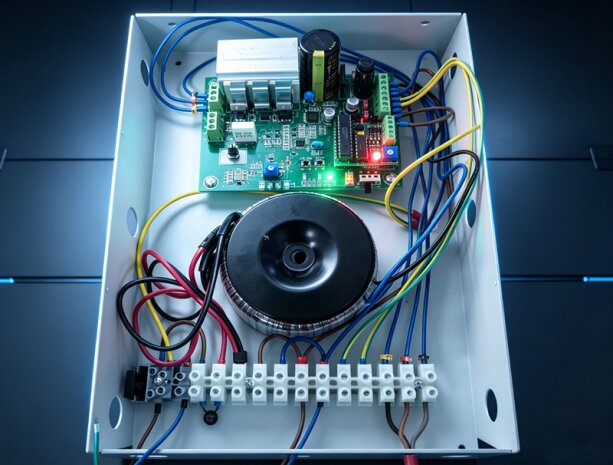
The heart of the box is a set of custom PCBA control boards assembled in-house. For power, this build uses a BYQ 120T toroidal transformer (0–120 V input, 0–22 V output) feeding an EMC power filter — model PX3-10A-T(03), rated 115/250 VAC, 10 A, 50/60 Hz, working range −25 °C to +100 °C, CE/RoHS. The toroid keeps the stray magnetic field low, the filter keeps conducted noise off the supply line, and together they give the controller a clean, stable rail to run on.
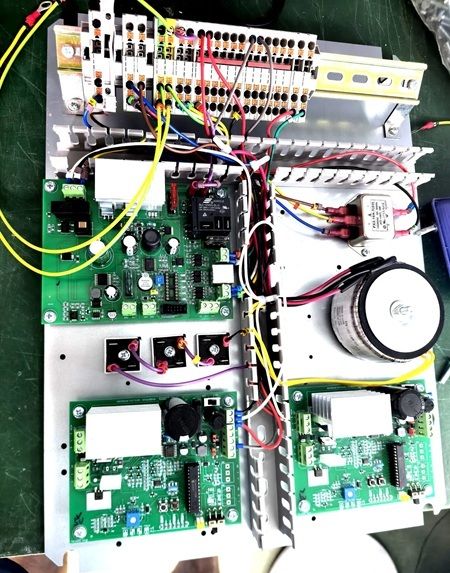
Fig. 1 — Power section: toroidal transformer, EMC filter, relay and terminal block layout
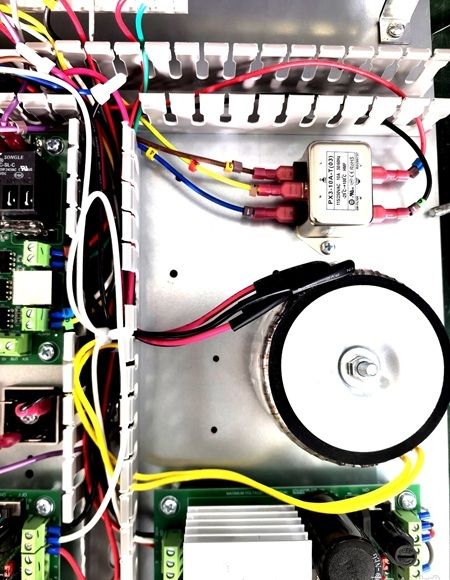
Fig. 2 — Close-up of the BYQ 120T toroidal transformer and PX3-10A-T EMC filter
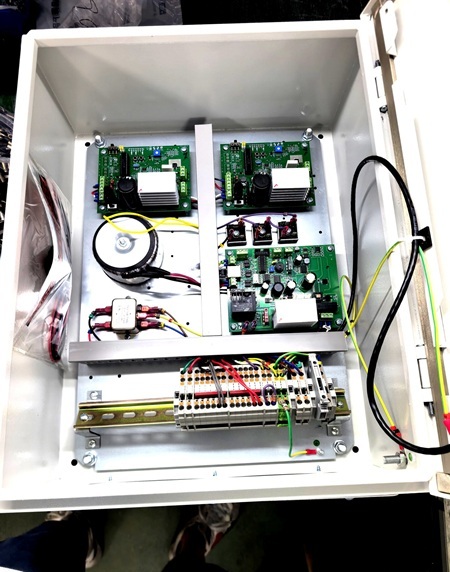
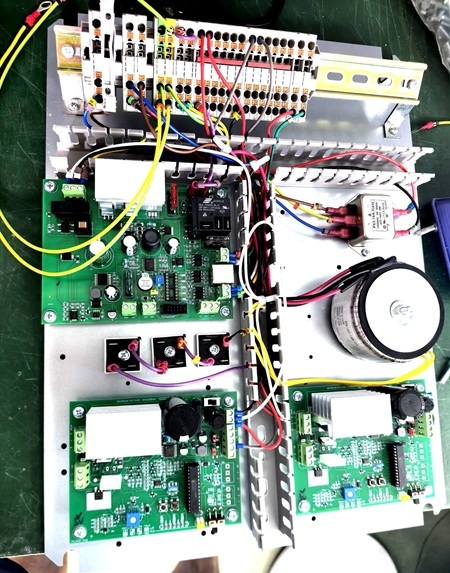
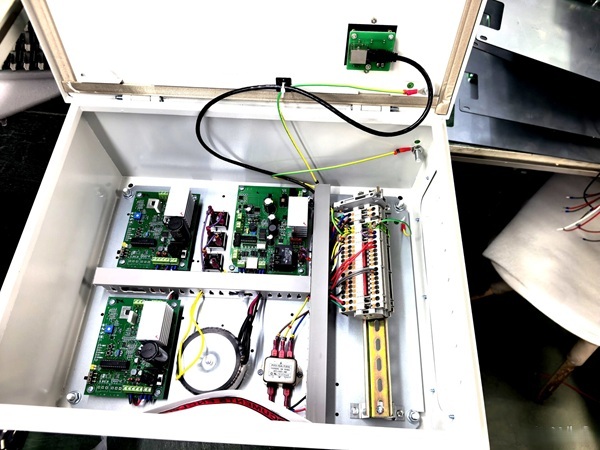
Everything is mounted on a metal backplate: the filter, the transformer, a DIN rail for the terminal blocks, and the boards. One detail worth pointing out — the relays are SONGLE SLC-12VDC-SL-C types rated 30 A (250 VAC / 30 VDC), comfortably over what the motor circuit actually pulls. Cable ducts keep the power wires separate from the signal wires, so noise does not travel along a shared path and a later technician can trace a wire without pulling the box apart.
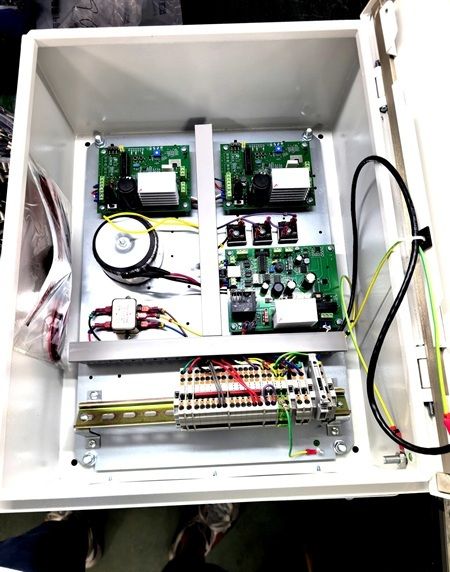
Fig. 3 — Internal layout on the metal backplate, boards and DIN-rail terminals
The wiring is where the box either looks like a professional job or like a hobby project. Every wire here is cut to length, fitted with a number sleeve, and landed on a spring-cage terminal block, so no screw ever loosens on a vibrating machine. On the terminal rails the function of each point is marked — N1, N2, L2, PE-1A/2A, S1, S2, OV, SLV and a bank of ±VE returns — so a maintenance engineer on site can work from the drawing without guessing. Grounding is done properly: a dedicated PE return, and a yellow-green earth wire tied off on the cabinet door so the metal enclosure stays at chassis potential.
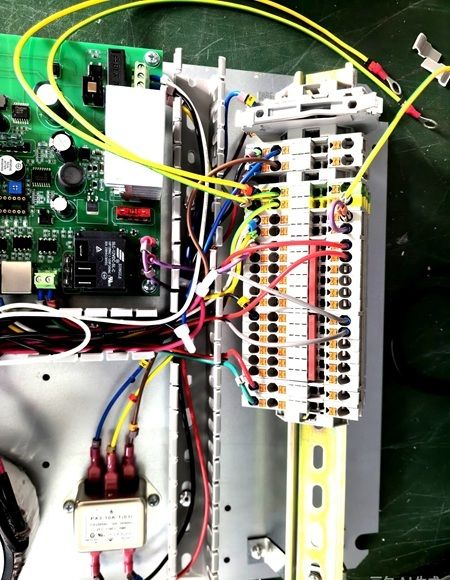
Fig. 4 — Terminal-block wiring with numbered sleeves and function markings
The door itself carries a small adapter board and the external communication port for this controller, so the end customer can plug in a network cable for remote monitoring and parameter setup without opening the box. Two locking clamps hold the door shut against dust.
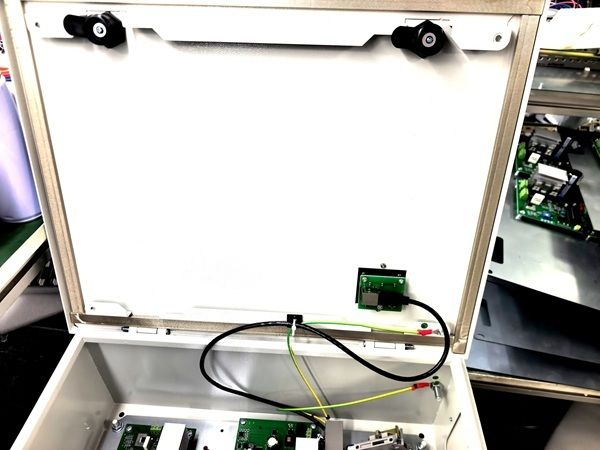
Fig. 5 — Cabinet door: adapter board, earth bonding and locking clamps
Before it shipped, the cabinet went through a continuity and safety check — every terminal to its correct function, insulation, and a power-on test of the full circuit under load. That is standard here: no cabinet leaves without being powered up and checked against the wiring diagram first.
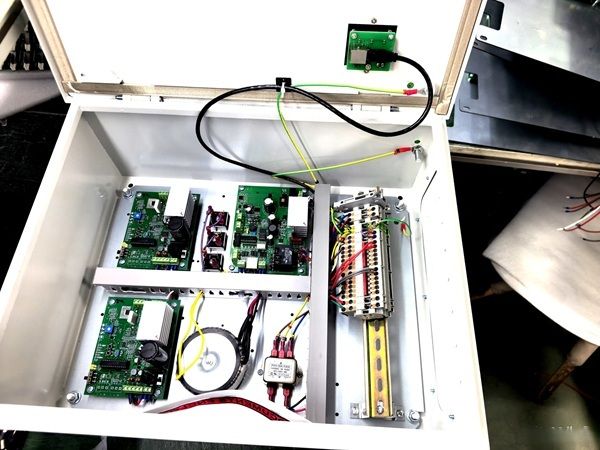
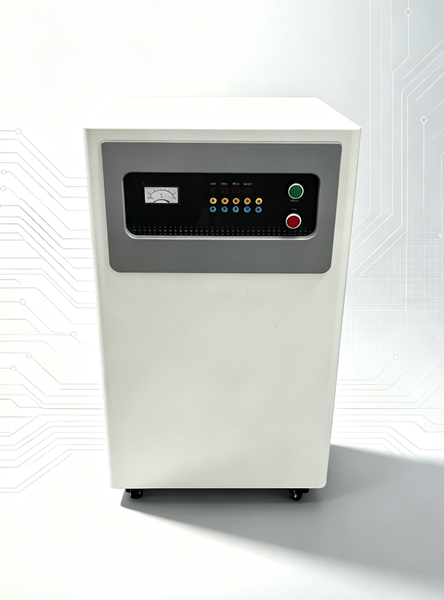
Fig. 6 — Finished cabinet, fully wired and ready for test
This is the part of box build most factories quietly dislike — the sourcing, the coordination, the rework when a drawing does not match a part. For our customers the value is simpler: one supplier handles the PCBA, the component sourcing, the mechanical assembly, the wiring and the final test, so both project lead time and vendor-management load come down. Prototype runs and full production use the same line, and ISO9001 / IATF16949 keep the process repeatable.
Table 1 — Key components in this build
|
Component |
Specification / role in this build |
|
Control PCBA |
Custom boards, SMT/THT assembled in-house (drive & control) |
|
Toroidal transformer |
BYQ 120T, input 0–120 V, output 0–22 V |
|
EMC power filter |
PX3-10A-T(03), 115/250 VAC, 10 A, 50/60 Hz, −25 °C to +100 °C, CE/RoHS |
|
Power relay |
SONGLE SLC-12VDC-SL-C, 30 A 250 VAC / 30 VDC, 1 HP 120 VAC / 1.5 HP 240 VAC |
|
Terminal blocks |
Spring-cage DIN-rail, marked N1/N2/L2/PE/S1/S2/OV/SLV/±VE |
|
Fuse protection |
5 A, with fuse holder |
|
Wiring |
Cut to length, wire-number sleeves, cable ducts, strain relief |
|
Enclosure |
Steel cabinet, door with communication port and earth bonding |
If you build machines and would rather spend engineering time on the machine than on the control box, send us your schematic and BOM — happy to quote a box-build project from prototype to volume.
Project Overview
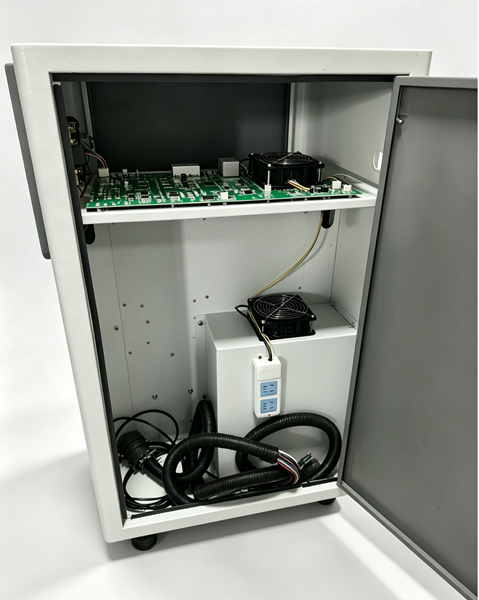
A machine tool manufacturer required a reliable control cabinet for high precision wire cut machines. Their challenge lay in coordinating multiple suppliers, inconsistent quality across separate PCBA and cabinet assembly, and long prototype lead times. We delivered a full turnkey Box Build solution.
Customer Pain Points
- Disconnected procurement of PCB, components and cabinet assembly caused communication issues and quality variations
- Complex internal wiring and integration required extensive debugging work
- Tight timeline demanded fast prototype delivery and stable mass production capability
Our Solution Workflow
1. Circuit and mechanical layout optimization tailored for wire cut control
2. BOM component sourcing and supply validation
3. Custom PCBA fabrication with electrical testing
4. Box Build integration: power units, breakers, fans and complete harness wiring
5. System commissioning, aging test and pre-shipment inspection
Project Outcomes
- Fully assembled and tested high precision wire cut control cabinets supplied
- One-stop service unified quality standards and reduced customer integration workload
- Met prototype schedule and supported smooth mass production transition
- Stable control performance guarantees high precision and continuous operation of wire cutting equipment
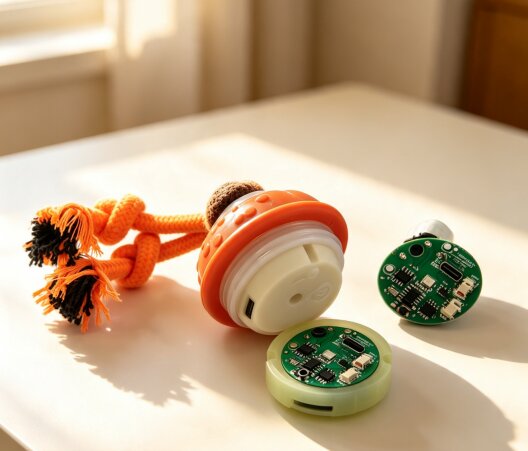
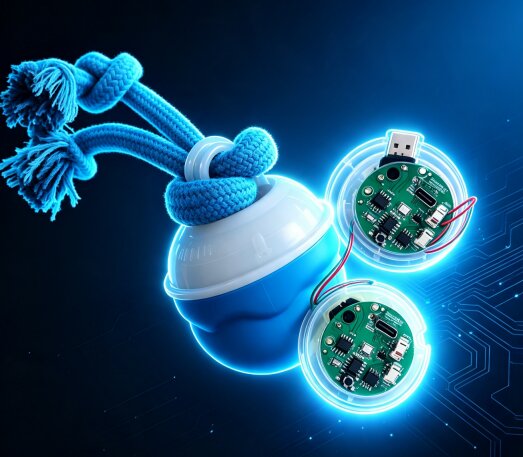
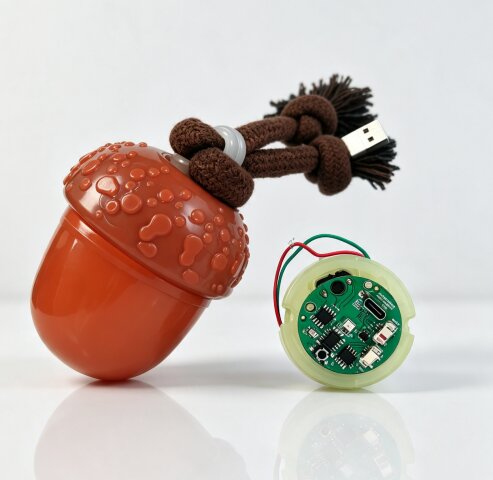
We design miniaturized dedicated circuit boards for an overseas pet toy brand, with tailored firmware for bouncing & light interaction, perfectly fitting the original toy shell mold without mold modification.
Off-the-shelf universal boards have fixed single bouncing modes with unsynchronized light effects. No intelligent timing standby leads to fast power drain and overheating. Standard PCB sizes do not match existing product molds with high extra mold revision costs.
The upgraded toy brings stronger interactive fun and longer pet play time, with better battery life and durability. Unique intelligent features help the client stand out from homogeneous low-end products and expand mid-to-high-end overseas pet toy market share.

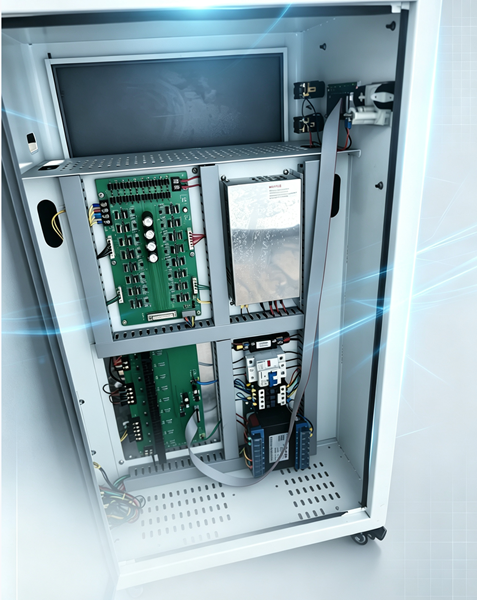
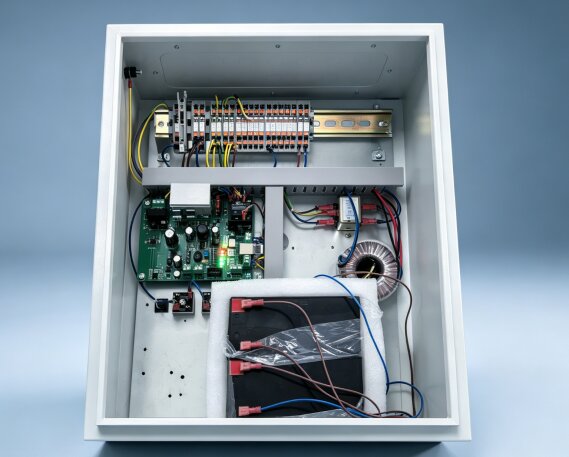
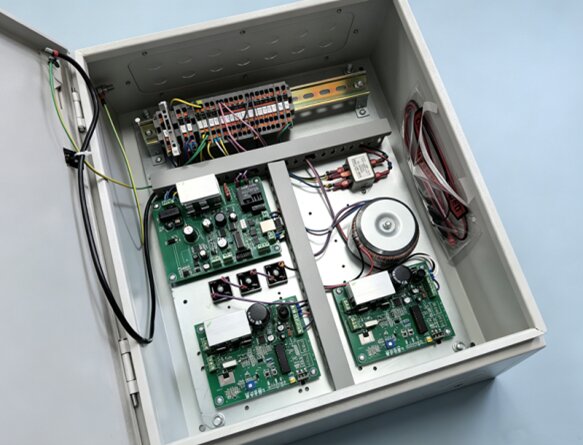
We provide customized integrated control cabinets for a Saudi building automation client, including cabinet fabrication, PCBA production, internal wiring harness assembly, full testing and finished export delivery.
Conventional single-door controllers cannot centrally manage multiple roller shutters. They lack fire emergency linkage, flexible adjustment of lifting time and door height, and require coordination among multiple suppliers which delays delivery.
A single cabinet manages several rolling doors uniformly and meets industrial fire safety standards. It largely reduces on-site installation and debugging work, delivering plug-and-play finished cabinets for factories and commercial buildings in Saudi Arabia.
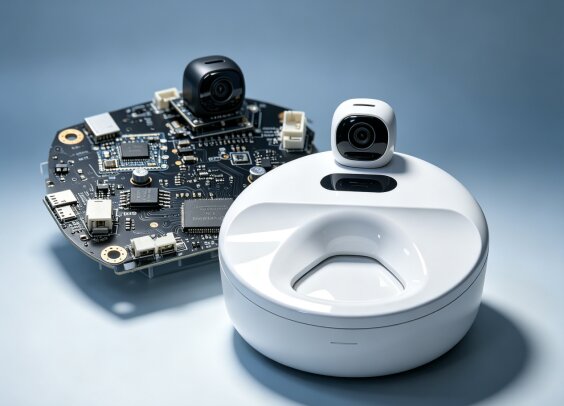
We serve an overseas smart pet device brand to customize a full electronic control system with AI pet recognition and health tracking, including firmware programming and complete PCBA manufacturing.
Generic feeder boards only support fixed-time feeding without pet identification. Integration of camera, motor, temperature sensor and communication modules causes severe signal interference, loud operation and poor long-term stability.
Realize core intelligent functions: pet identity recognition, adaptive feeding portion adjustment, activity tracking, drinking reminder and food temperature preservation. The low-noise and reliable design greatly raises user satisfaction and repurchase rates after overseas launch.
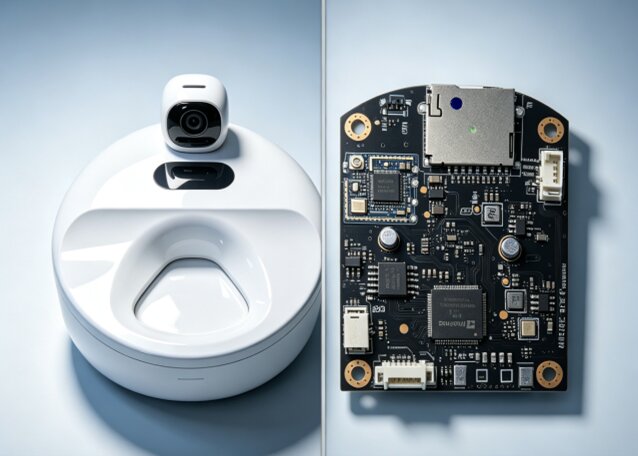
We serve an overseas smart pet device brand to customize a full electronic control system with AI pet recognition and health tracking, including firmware programming and complete PCBA manufacturing.
Generic feeder boards only support fixed-time feeding without pet identification. Integration of camera, motor, temperature sensor and communication modules causes severe signal interference, loud operation and poor long-term stability.
Realize core intelligent functions: pet identity recognition, adaptive feeding portion adjustment, activity tracking, drinking reminder and food temperature preservation. The low-noise and reliable design greatly raises user satisfaction and repurchase rates after overseas launch.


Have a question or need a quote? Fill out this form and our team will get back to you quickly!